Crock Sauerkraut
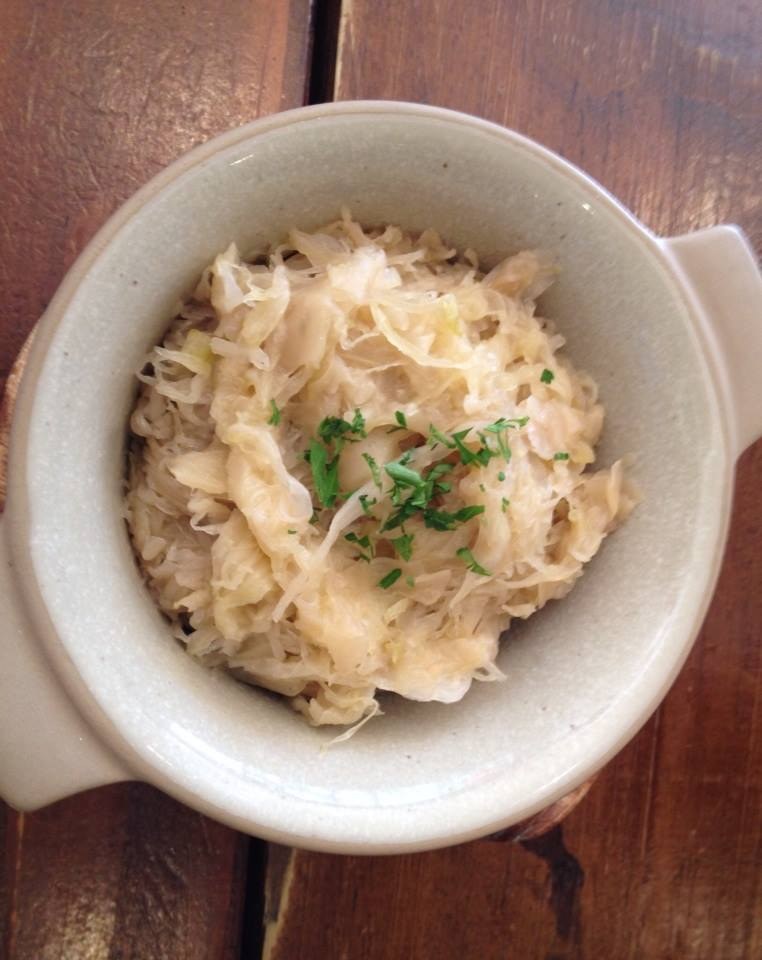
Photo: Qwerty Binary, CC BY-SA 3.0, via Wikimedia Commons
Three heads of green cabbage, salted and packed in a water-sealed crock until sour. The cabbage has to stay under brine the whole time. If it does not make enough juice, add salted brine, not plain water.
Ingredients
- 3 firm heads of green cabbage, about 6 to 8 lb
- Pickling salt or fine sea salt, 3 level tablespoons per 5 lb of shredded cabbage (2.25% by weight, 22.5 g per kilogram)
Only if the juice does not cover the cabbage
- Cool water, just enough to cover the weights
- Pickling salt, 1 ½ tablespoons per quart of that water
Instructions
Scrub the crock, the lid, and the weights with hot water and unscented soap, including the water moat. Rinse until the water sheets off clean.
Wash those same surfaces with white distilled vinegar and let it sit a minute. Rinse again with clean water and drain the crock upside down. Vinegar left in the crock stalls the ferment. For a hotter clean, warm the crock with hot tap water first, then pour a kettle of boiling water through it and let it cool. Boiling water on a cold crock can crack it.
Pull off the dirty outer leaves and save two clean ones. Quarter the heads, cut out the cores, and shred about ¼ inch thick. Weigh the shreds.
Toss with pickling salt at 3 level tablespoons per 5 pounds of shreds, or 22.5 grams per kilogram. Massage for 5 to 10 minutes, until the cabbage slumps and turns glossy. Rest 20 minutes and massage once more. Weigh the salt if you use a light kosher salt such as Diamond Crystal. By the spoon it is about half the weight of pickling salt, and a light-salted crock molds.
Pack the cabbage into the crock a handful at a time, pressing until the juice comes up. Leave no dry pockets. Stop at least 4 inches below the rim so the weights and the rising brine fit.
If the juice does not cover the cabbage, boil 1 ½ tablespoons pickling salt in each quart of water, cool it completely, and pour in only enough to stand about an inch over the weights. Do not add plain water. Do not fill the crock just because it is large. Three heads will sit low in a big crock, and that is fine.
Lay the saved leaves over the shreds and set the weights on them. Every strand has to be under brine. A strand in the air is where mold starts.
Set the lid in the moat. Fill the moat with water and a pinch of salt. Put the crock where it will stay between 65 and 75°F, out of the sun.
Check the moat every two or three days and top it up. A dry moat lets air in. Leave the lid on. Bubbling, and a little brine pushing out into the moat in the first week, means the ferment is working. Wipe the outside. Do not let moat water run back into the crock.
At 3 to 4 weeks, or 5 to 6 weeks if the room is closer to 60°F, open it and taste. It should be sour and clean, with some bite left. For a sharper kraut, reseal it and wait another week. Below 60°F it may never sour. Above 75°F it goes soft.
Fuzzy mold, a rotten or solvent smell, or a slimy feel means throw the batch out. A flat white film over kraut that still smells clean and sour is kahm yeast: skim it, weigh the kraut back under the brine, and reseal. Do not keep a batch that grew colored fuzz.
Pack into clean jars with brine covering the kraut and refrigerate. It keeps for months.
Notes
If the finished kraut is saltier than you want on the plate, rinse the serving. Do not cut the salt in the crock to make it milder. That is what lets it spoil.
Stir 1 tablespoon of caraway seed in with the salt if you want it, and a teaspoon of lightly crushed juniper berries if you have them. Plain cabbage and salt is the whole recipe otherwise.
It is done when a piece from the middle is as sour as the top and the bubbling has mostly stopped. It tastes better after another week or two in the refrigerator.
Nutrition
- Serving size
- 1/2 cup
- Calories
- 13 kcal
- Fat
- 0 g
- Sodium
- 460 mg
- Carbohydrates
- 3 g
- Fiber
- 2 g
- Sugar
- 1 g